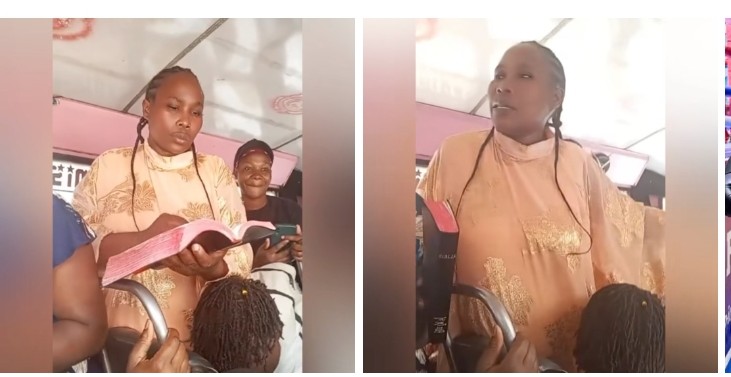
Kenyan Pastor Claims Moses from the Holy Bible Married a Kisii Wife, Sparks Online Debate
Kenyan Pastor Claims Moses from the Holy Bible Married a Kisii Wife, Sparks Online Debate
In a surprising and controversial statement that has ignited social media conversations across Kenya, a Kenyan pastor recently claimed that Moses, the revered prophet from the Holy Bible, married a woman from the Kisii tribe. The assertion, made during a church service and subsequently shared on Instagram, has generated mixed reactions among believers, historians, and cultural enthusiasts alike.
The Claim
The pastor, whose identity remains under discussion, took to Instagram to make the bold declaration. In the post, she suggested that the biblical Moses, known for leading the Israelites out of Egypt and receiving the Ten Commandments on Mount Sinai, was married to a woman from the Kisii community in Kenya.
The caption read: *”Moses, the great prophet of the Bible, was married to a Kisii woman. Our history and biblical stories are intertwined. It’s time we recognize the significance of our cultural heritage in biblical narratives.”* The post included a picture of Moses from a classic biblical illustration alongside a Kisii woman adorned in traditional attire.
Reactions and Social Media Stir
The claim quickly went viral, sparking intense debates across various social media platforms. Supporters praised the pastor for highlighting Kisii culture and its possible biblical connections, while skeptics questioned the historical accuracy of the statement.
Many Kenyans found the narrative intriguing, viewing it as an opportunity to explore and celebrate their rich cultural heritage within religious contexts. Others argued that it was an overreach, emphasizing that biblical accounts are spiritual and historical texts that should not be conflated with modern ethnic identities.
Historical and Cultural Context
The Kisii community, also known as the Abagusii, is an ethnic group native to southwestern Kenya. They have a rich cultural history, with unique traditions, language, and practices. Historically, there is no direct biblical record linking Moses to the Kisii or any specific Kenyan tribe.
However, some cultural enthusiasts and local pastors often explore the idea that biblical stories have connections to African communities, emphasizing the universality of biblical teachings and encouraging pride in local heritage.
Expert Opinions
Commenting on the claims, Dr. Peter Kamau, a biblical scholar at the University of Nairobi, stated: *”There is no historical evidence to suggest Moses married a woman from Kisii or any specific Kenyan tribe. Biblical narratives are rooted in Middle Eastern history and culture. While it’s valuable to explore African connections to biblical stories, we should do so with scholarly rigor.”*
Meanwhile, cultural anthropologist Dr. Sarah Otieno emphasized the importance of respecting both religious texts and cultural identities: *”Blending biblical figures with local tribes can be a way to foster pride and cultural awareness, but it should be done responsibly to avoid misinterpretation.”*
### The Bigger Conversation
This incident highlights a broader conversation about the intersection of faith, history, and cultural identity in Kenya and Africa at large. It raises questions about how communities interpret religious stories and their significance within local contexts.
While some see it as an empowering narrative that elevates Kisii heritage, others view it as a misrepresentation of biblical history. Regardless of the stance, the debate underscores the vibrant and diverse ways in which faith and culture intertwine in Kenyan society.
Conclusion
The Kenyan pastor’s claim that Moses married a Kisii woman has certainly stirred emotions and discussions, reflecting the deep connection many Kenyans feel toward their heritage and religious beliefs. Whether viewed as a metaphorical statement or a literal assertion, it has succeeded in reigniting interest in the rich tapestry of Kenya’s cultural and spiritual landscape.
As the conversation continues, one thing remains clear: the stories we tell about ourselves shape our identity, and in Kenya, that story is as diverse and vibrant as the nation itself.