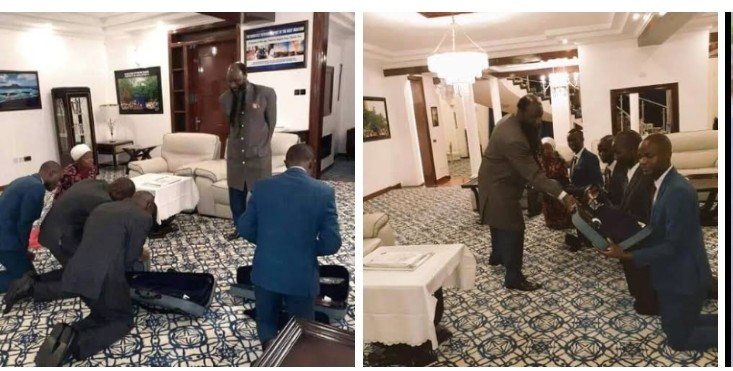
“I Quit The Church After Tulichanga Kujengea Owuor’s Multimillion Mansion in Runda, But Sisi Tukitaka Mansion Anatuambia Makao Yetu Ipo Mbinguni”: An Ex-Member of Prophet Owour’s Church Opens Up
“I Quit The Church After Tulichanga Kujengea Owuor’s Multimillion Mansion in Runda, But Sisi Tukitaka Mansion Anatuambia Makao Yetu Ipo Mbinguni”: An Ex-Member of Prophet Owour’s Church Opens Up
In recent years, the rise of charismatic churches in Kenya has sparked both admiration and controversy. Among these is the church led by Prophet Owour, a prominent spiritual figure whose influence extends across the nation. However, behind the veneer of spiritual authority, some former followers are beginning to speak out about what they describe as manipulation, materialism, and spiritual abuse. One such individual, an ex-member of Prophet Owour’s church, has come forward with startling revelations that challenge the church’s teachings and practices.
The Promised Paradise Versus Material Reality
The ex-member, who prefers to remain anonymous for fear of repercussions, claims that the church preaches a message centered around spiritual salvation and the rejection of worldly possessions. According to him, church teachings emphasize that material wealth is a barrier to entering heaven, and followers are urged to detach themselves from worldly riches. This doctrine appeals to many who wish to attain spiritual purity and eternal life, fostering a sense of humility and sacrifice.
However, this spiritual narrative starkly contrasts with the church’s actual financial pursuits. The ex-member reveals that, contrary to the teachings of renunciation, the church has a well-orchestrated financial agenda. The primary goal, he alleges, has been to amass wealth for Prophet Owour himself. The most glaring example of this, he says, is the construction of Owour’s multimillion mansion in Runda, one of Nairobi’s most affluent neighborhoods.
The Mansion in Runda: A Symbol of Contradiction
According to the former member, the church raised approximately Ksh. 350 million to build the luxurious mansion for Prophet Owour. This revelation comes as a shock to many followers who have been told to shun materialism, emphasizing instead that they should focus on spiritual wealth and heavenly riches. The mansion stands as a stark contrast to the humble lifestyle preached from the pulpit, raising questions about the true priorities of the church leadership.

This contradiction has caused disillusionment among many followers, especially those who have dedicated their resources and faith to the church’s teachings. The ex-member points out that such displays of opulence are not only hypocritical but also serve to exploit followers’ faith and generosity.
Quitting Professions for ‘Spiritual Purity‘
Another startling revelation from the ex-member concerns the strict discipline enforced on church members. He claims that upon joining the church, followers are often pressured to abandon certain professions deemed immoral or incompatible with spiritual purity. For instance, careers such as hairdressing, makeup artistry, or manicure services—professions that involve personal grooming and are often associated with vanity—are discouraged or outrightly rejected.
He believes that the church regards such professions as promoting immorality, and members are told that engaging in them could hinder their spiritual progress. This doctrine pushes followers to quit their jobs, sometimes abandoning their livelihoods, in pursuit of a supposedly higher spiritual calling.
Poverty, Glorification, and Misguided Teachings
Perhaps most troubling, according to the ex-member, is the church’s stance on poverty. Many followers are taught to glorify poverty, believing that suffering and lack are pathways to divine favor and entry into heaven. This doctrine, he argues, has led many followers into prolonged financial hardship, with some languishing in poverty despite their unwavering faith.
He criticizes the church’s emphasis on giving offerings and donations, which followers believe are sacrifices to God that will bring blessings. The donations are often directed toward the prophet, who claims to use the funds for spiritual and charitable purposes. However, the ex-member contends that much of this money is funneled into building the prophet’s personal wealth, including the Runda mansion.
Personal Struggles and Disillusionment
The ex-member admits that he personally experienced stagnation in his life and spiritual journey while in the church. Despite his contributions and faith, he says he saw no tangible progress, prompting him to reevaluate his beliefs and allegiance. His decision to leave was driven by the realization that the church’s teachings were inconsistent with the values he believed in.
He also recalls disturbing reports about Prophet Owour’s behavior. He references a viral video featuring TV47’s Samira, which criticizes the prophet’s toxic demeanor and authoritarian leadership style. The ex-member confirms that Prophet Owour often speaks harshly and commands his staff and followers with a commanding, often disrespectful tone—traits that are incongruent with the qualities of a true spiritual leader.
The Need for Accountability and Reform
This ex-member’s revelations have ignited a broader conversation about accountability, transparency, and integrity within Pentecostal and charismatic churches in Kenya. Many followers are beginning to question the legitimacy of teachings that promote poverty and material sacrifice while church leaders live in luxury.
Critics argue that such churches exploit the faith of vulnerable followers, encouraging them to part with their hard-earned money in exchange for spiritual promises that often go unfulfilled. The case of Prophet Owour’s mansion is emblematic of this perceived hypocrisy—where spiritual messages of humility coexist with displays of wealth and material excess.
The Role of Social Media and Public Discourse
The full story has gained traction on social media platforms, with videos and testimonials circulating rapidly. The TikTok video linked by the ex-member has exposed many followers to the inside truths of the church’s operations. Such online disclosures are vital in fostering transparency and holding religious leaders accountable.
The narrative also echoes broader concerns about the rise of prosperity gospel teachings in Africa—where faith is intertwined with material success, often at the expense of genuine spiritual growth and social justice.
Final Thoughts: A Call for Reflection
The story of this ex-member serves as a stark reminder that spiritual leadership should be rooted in humility, integrity, and compassion—not wealth accumulation and material display. While faith is a personal journey, the structures that support and promote such churches must be scrutinized to ensure they serve the spiritual and social well-being of their followers.
As more individuals come forward to share their experiences, there is hope for a more honest and accountable religious landscape in Kenya. Followers are encouraged to seek genuine spiritual growth and to question teachings that appear to contradict the fundamental principles of humility and service.
Conclusion
The revelations from this former member of Prophet Owour’s church underscore the importance of transparency and accountability in religious institutions. The stark contrast between the church’s teachings and its practices—exemplified by the multimillion mansion in Runda—raises critical questions about the true nature of faith and leadership.
While faith remains a personal and profound aspect of human life, it should never be used to justify greed or hypocrisy. As more voices speak out, the hope is that religious organizations will reflect on their roles as vessels of genuine spiritual guidance, rather than avenues for personal enrichment.
Note: The linked TikTok video provides further insights into the ex-member’s account and can be viewed here: https://vt.tiktok.com/ZSmLRYx7K/ ]**