
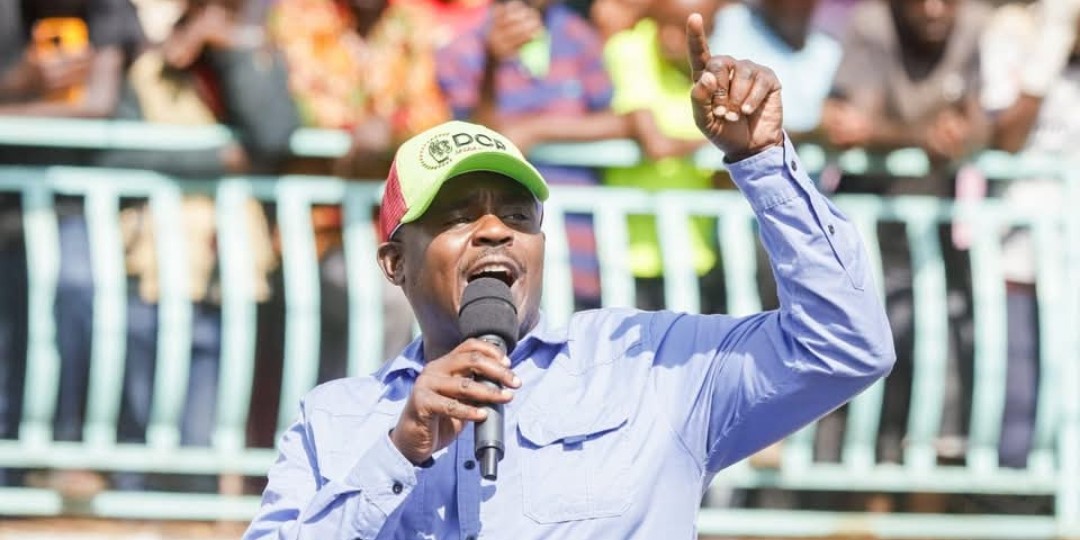
“My Play ‘Who Killed Amollo?’ Will Open Eyes of Many Kenyans,” Says Cleophas Malala
In a bold move that has sparked widespread discussion across social media and political circles in Kenya, Cleophas Malala, the Deputy Party Leader of the Democratic Congress Party (DCP) and former senator of Kakamega, announced the upcoming launch of a provocative new play titled *Who Killed Amollo?*. Malala’s revelation has reignited debates on political accountability, historical mysteries, and the power of art to challenge the status quo.
A Play with a Purpose
Malala revealed that he has already penned this controversial play, which he describes as a dramatization centered around the mysterious death of Raila Odinga, Kenya’s iconic former Prime Minister. While Raila Odinga is still alive making the play a work of fiction or allegory the narrative is crafted to question and scrutinize the circumstances surrounding his political life and the “untimely” events that have shaped Kenya’s political landscape.
Malala emphasizes that Who Killed Amollo? is not just a theatrical piece but a conversation starter. “There are a lot of questions that need to be answered,” he said, suggesting that the play will challenge viewers to reconsider widely accepted narratives and push for truth and transparency.
The Suspicion and the Conspiracy
According to Malala, the play explores the suspicion that Raila Odinga’s deathor perhaps a political eliminationwas orchestrated by powerful forces within the country. While Raila is alive, Malala implies that there are hidden truths about his political journey and the circumstances that could have led to his demise, or at least metaphorically “killed” in the political arena.
He claims that those who were close to Raila may possess information that even Raila’s own family is unaware of secrets that could potentially shake the foundations of Kenyan politics if brought to light.
Opening Kenyans’ Eyes
Malala believes that art has the power to illuminate uncomfortable truths and inspire action. “My play will open the eyes of many Kenyans,” he asserts. He hopes that by dramatizing these issues, the play will provoke public discourse and demand accountability from those in power.
He also stated that the play aims to challenge Kenyans to reflect on their history, question authorities, and seek justice for unresolved issues that have lingered for decades.
Public and Political Reactions
The announcement has stirred mixed reactions among Kenyans. Supporters see it as a courageous move to confront sensitive and possibly suppressed truths, while critics argue that it may be politically motivated or sensationalist.
Nevertheless, Malala’s move underscores the role of art and theatre as potent tools for social critique and political activism in Kenya. It echoes a broader trend where artists and political figures leverage creative platforms to address national issues.
As the launch of Who Killed Amollo? approaches, many Kenyans are eager to see how this play will unfold and what revelations it might bring. Malala’s bold step highlights the importance of holding leaders accountable and ensuring that history does not remain buried in silence. Whether or not the play provides concrete answers, it undoubtedly has the potential to spark vital conversations about justice, truth, and the future of Kenya.
For those interested in viewing Malala’s full statement, a video is available on YouTube, where he elaborates on his vision for the play and its significance for Kenya’s political landscape.
https://youtu.be/yZD539h60so?si=yt_8ONr-fGLk1oO2
